 James Archer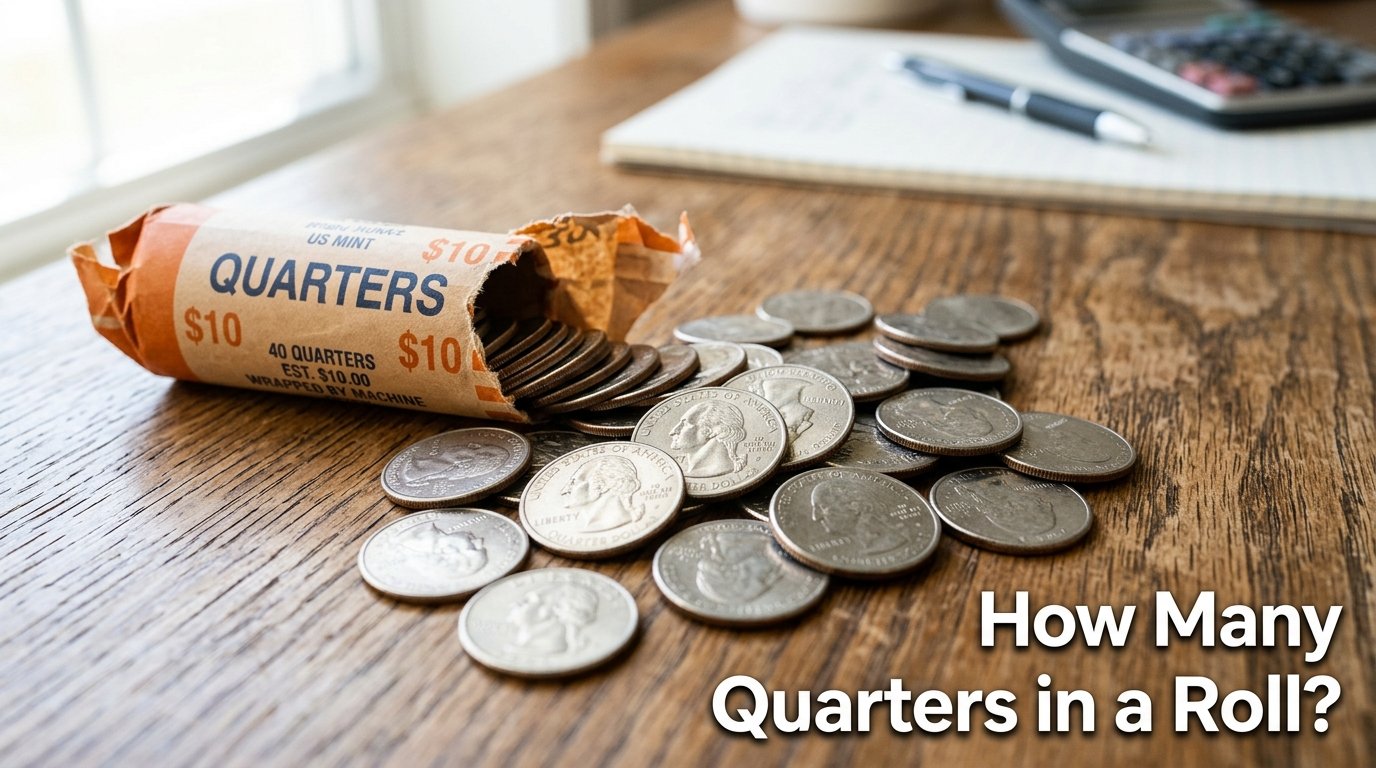
Have you ever needed exact change for a vending machine or a parking meter? Many people reach for a roll of quarters because it feels easy and neat. You might wonder how many quarters are in a roll and why it matters so much in daily life. This simple question comes up often when folks handle coins at home, at work, or even at the bank. A roll of quarters holds a fixed number of coins wrapped together in paper or plastic. This makes counting fast and safe. In this article, you will learn the exact count, the total value, and the dollar amount in clear steps. We will also explore why rolls exist, how to use them, and smart tips to remember. After that, you will feel confident about quarters in a roll every time you see one. Let’s start with the basics so everything flows together nicely.
What Is a Roll of Quarters?
A roll of quarters is simply a stack of quarter coins wrapped tightly in a paper tube or a clear plastic holder. Banks and stores prepare these rolls to keep coins organized. Because the wrapper holds everything in place, you do not lose any coins when you carry them. For example, imagine stacking blocks in a straight tower and then wrapping tape around it. That tower becomes a roll, and it stays steady. This design started many years ago when banks needed a quick way to move large amounts of change. Over time, the roll became a standard tool for everyone. Another thing is that each roll looks the same, so you know right away what is inside without opening it. That’s why people trust rolls of quarters for business or fun activities like coin collecting. Next, we will see exactly how many fit inside one.
How Many Quarters Are in a Standard Roll?
Now let’s answer the main question: how many quarters are in a roll? A standard roll holds exactly 40 quarters. This number has stayed the same for a long time, even in 2026. Banks and the government use this count because it fits neatly in the wrapper size made for quarters. Each quarter is about the same thickness, so 40 of them stack up to a perfect length. This means you can trust any new roll from a bank to have 40 coins inside. For instance, if you buy one roll at the bank counter, you get 40 shiny quarters ready to use. In addition, this fixed count helps when you plan big purchases. You know right away that one roll gives you enough coins for many small buys. Because the number never changes, it feels simple and reliable. After you learn this count, you can move on to the money side of things.
What Is the Value and Dollar Amount in a Roll of Quarters?
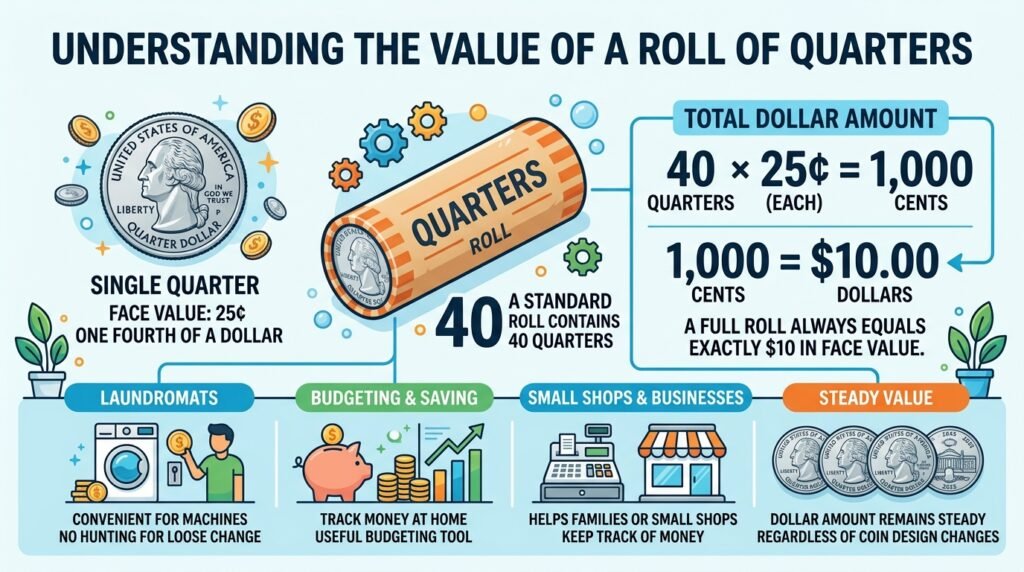
Each quarter is worth 25 cents, which is one fourth of a dollar. So when you have 40 quarters in a roll, you multiply to find the total. Forty times 25 cents equals 1,000 cents. And 1,000 cents is the same as 10 dollars. This means a full roll of quarters always equals exactly $10 in face value. That dollar amount is easy to remember because it matches the count in a nice way. For example, suppose you need to pay for laundry at a laundromat. One roll gives you $10 worth of coins to slide into the machines without hunting for loose change. Over time, this value helps families or small shops keep track of their money. Another thing is that the dollar amount stays steady even if coin designs change each year. You still get $10 no matter what picture is on the quarter. This clear value makes rolls of quarters useful for budgeting or saving small amounts at home.
Why Do Banks and Stores Use Rolls of Quarters?
Banks and stores like rolls of quarters because they save time and reduce mistakes. When workers count loose coins by hand, it takes longer and errors can happen. A roll lets them hand over money fast and know the exact total. Because of this, tellers at banks often keep boxes of rolls ready for customers who need change. For example, a store owner might ask for several rolls to fill the cash register drawer at the start of the day. This system also protects coins from getting dirty or bent during transport. In addition, rolls help the whole money system run smoothly across the country. Next, think about how this helps you personally. When you deposit coins at the bank, workers might roll them into neat packages before storing them. That’s why you see rolls everywhere from gas stations to grocery stores. Over time, this habit has made handling quarters easier for everyone in daily life.
How Much Does a Roll of Quarters Weigh?
A single roll of quarters feels solid in your hand because it has some weight. Forty quarters together weigh about eight ounces, or roughly half a pound. Each modern quarter weighs a little more than five grams, so the full stack adds up nicely. This weight matters when you carry many rolls at once. For instance, if you take ten rolls to a coin machine, you are holding about five pounds of coins. That amount is still easy to manage in a small bag. Because the weight is consistent, banks can stack boxes of rolls on shelves without worry. Another thing is that the wrapper keeps the coins from rattling and damaging each other. This steady weight also helps coin collectors who search through rolls for special designs. You can feel the difference if a roll is light or heavy, which tells you something might be wrong inside.
How to Count Quarters Yourself Without a Machine
Sometimes you have a pile of loose quarters and want to make your own roll. You can do this at home in simple steps. First, gather 40 quarters and line them up on a flat table. Next, slide them carefully into an empty paper wrapper from the bank or a store. After that, fold the ends tight so nothing falls out. This process takes only a few minutes once you practice. For example, many families do this on weekends to turn messy change jars into neat rolls. Because you count as you go, you learn exactly how many quarters are in a roll each time. In addition, this habit teaches kids about money in a fun way. Over time, you will get faster and avoid mistakes. That’s why learning this skill feels helpful for anyone who handles coins often.
Tips for Using and Storing Quarter Rolls in Everyday Life
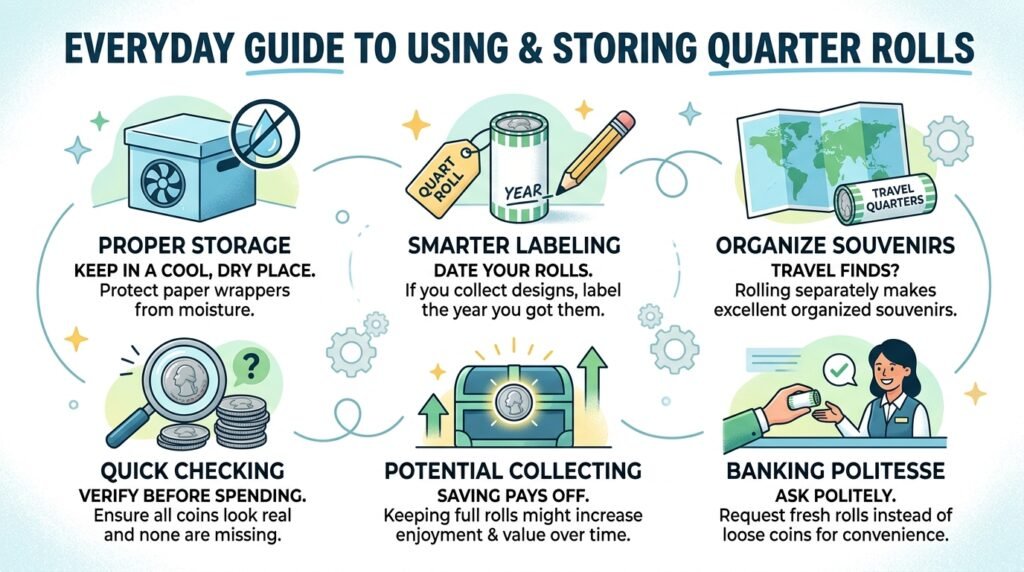
Using quarter rolls becomes even better with a few easy tips. Keep them in a cool, dry place so the paper does not get damp. Also, label each roll with the date if you collect different designs from each year. This way you remember when you got them. For example, if you travel and pick up quarters from other states, rolling them separately helps you organize souvenirs. Another thing is to check the roll before you spend it. Make sure all coins look real and none are missing. Because quarters can become collectible over time, saving a few full rolls might bring extra joy later. In addition, when you visit a bank, ask politely for fresh rolls instead of loose coins. This simple request makes your day smoother. Over time, these small habits turn quarter rolls into a smart part of your money routine.
Common Mistakes People Make with Quarter Rolls
Even though rolls are simple, some people still make easy mistakes. One common error is opening a roll and then forgetting to count the coins again before using them. This can lead to short counts if a coin slips out. Another mistake is storing rolls in a damp basement where the wrapper tears and coins get rusty. Because rust makes coins less useful, always choose a safe shelf instead. For example, a busy parent might toss rolls into a bag without checking the ends, and a few quarters fall out during a trip. That’s why taking an extra second to inspect pays off. In addition, some folks mix old and new rolls without noticing the difference in weight. Over time, these small slips add up and cause confusion. Learning from these examples helps you handle rolls of quarters with confidence every time.
Interesting Facts About Quarters and Their Rolls
Quarters have a long story that makes rolls even more fun to know about. The United States started making quarters in the late 1700s, and rolls became popular later when banks grew bigger. Today in 2026, new designs still appear each year, yet the roll size stays at 40 coins. This consistency feels comforting because you always know the count and value. Another fun fact is that some people enjoy searching rolls for rare coins that slipped into circulation. Because the government mixes coins from many years, surprises can hide inside. For instance, an older silver quarter might show up and make your day special. In addition, rolls help keep the economy moving by letting small businesses give change quickly. These little details show why learning about quarters in a roll connects you to bigger ideas about money and history.
FAQ About How Many Quarters Are in a Roll
Here are some natural questions people often ask about rolls of quarters, along with clear answers.
How many quarters fit in one roll?
A standard roll always holds 40 quarters.
What is the exact dollar amount in a full roll?
The total value is $10 because each quarter is worth 25 cents.
Can any bank give me rolls of quarters?
Most banks will provide rolls if you ask, especially if you have an account there.
What happens if a roll feels lighter than usual?
It might have fewer coins or a damaged wrapper, so count them yourself to be sure.
Are there plastic rolls instead of paper ones?
Yes, some stores use clear plastic tubes that also hold 40 quarters and show the coins inside.
Do all rolls of quarters have the same value?
Yes, every standard roll equals $10 in face value no matter the year on the coins.
Why should I learn about quarter rolls for my family?
Rolls make saving and spending change simple and teach kids about money in a hands-on way.
Wrapping Up What You Learned About Quarters in a Roll
In the end, understanding how many quarters are in a roll brings clarity to a small but useful part of daily money life. You now know the standard count is 40, the value is always $10, and the reasons behind the system make perfect sense. From banks to home kitchens, these rolls help keep things neat, quick, and trustworthy. By following the tips and avoiding common mistakes, you can enjoy using quarter rolls for years to come. Whether you need change for a quick errand or want to teach someone about coins, this knowledge feels fresh and practical. Take a moment next time you hold a roll in your hand and remember the simple math and steady design that make it work so well. It is a small thing that adds up to big convenience in our busy world.
Disclaimer:
This article is for informational purposes only and does not constitute financial advice. Coin handling practices may vary by location. All details reflect standard US banking practices as of 2026.
Explore More:
Charles Tyrwhitt 3 for 99 Deal (Shirts Offer, Promo Code, Prices & How to Claim)
What Does Dry Socket Look Like? Pictures, Symptoms, Healing Stages & When to Worry