 James Archer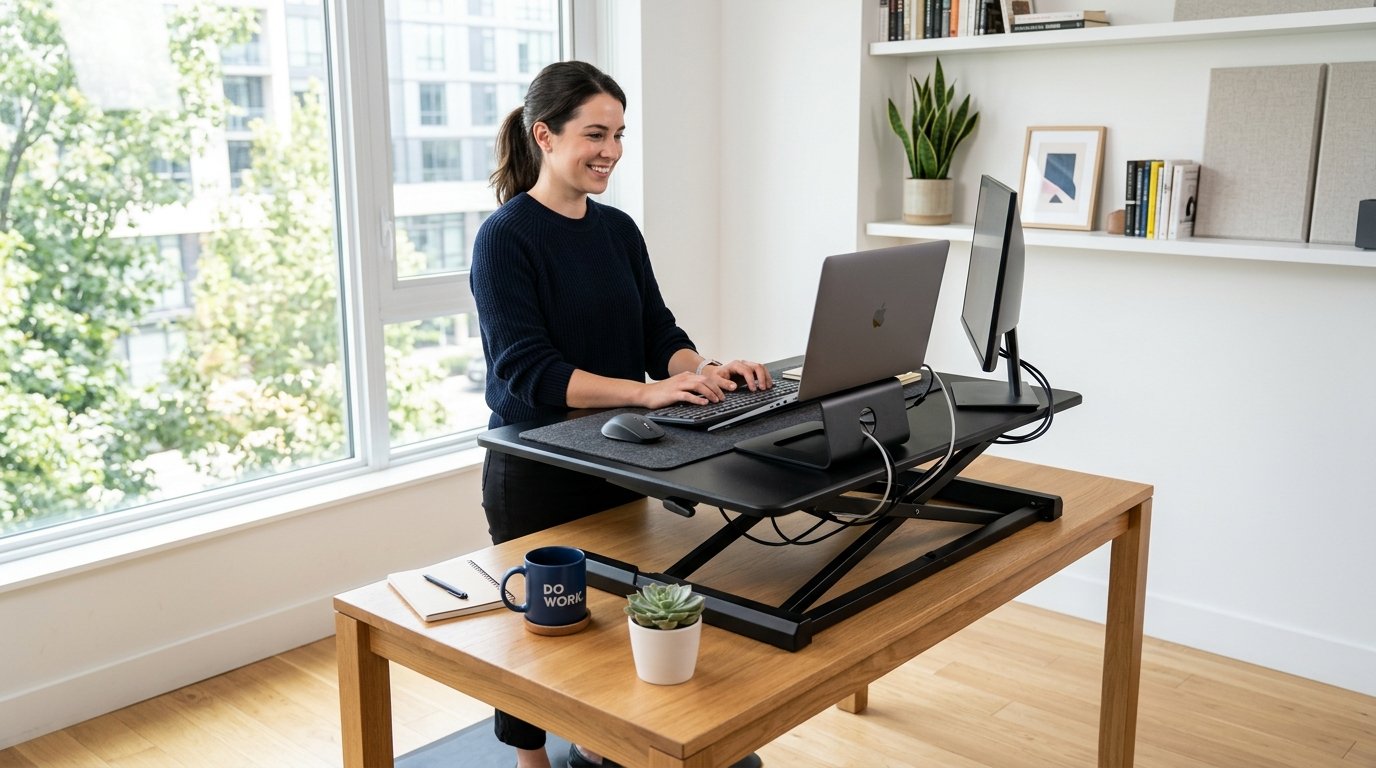
Many people sit at their desks for long hours every day. Over time, this can make their backs hurt, their necks feel stiff, and their energy drop. A riser desk offers a simple way to fix these problems. It lets you switch easily between sitting and standing while you work. This complete guide will explain everything in easy words. You will learn what a riser desk is, why it helps, how to use it, and more. By the end, you will understand if it fits your needs.
What Exactly Is a Riser Desk?
A riser desk is a special platform that sits right on top of your normal desk. It raises your computer screen, keyboard, and mouse to a comfortable height when you want to stand. After that, you can lower it back down for sitting. People also call it a desk riser or standing desk converter.
This tool does not replace your whole desk. Instead, it adds a new layer on top. Because of this, you can keep your favorite desk and still enjoy the benefits of standing sometimes. For example, imagine you have a regular wooden table at home. You place the riser on it, and now you can work tall when your legs feel tired from sitting. This simple idea makes a big difference in daily comfort.
Riser desks come in many sizes. Some are small for laptops only. Others are wide enough for big monitors and extra space for notebooks. They help turn any regular desk into a flexible workspace without big changes to your room.
How Does a Riser Desk Work?
Using a riser desk is straightforward. First, you set it on your existing desk. Next, you put your monitor and keyboard on the riser platform. Most models have a handle or lever on the side. When you pull the lever, the top rises smoothly with the help of springs or gas lifts.
This means the whole surface moves up together. Your screen stays at eye level, and your arms rest nicely. When you finish standing, you push the lever again, and it lowers gently. The process takes only a few seconds. Over time, this quick switch becomes a natural habit, like standing up to stretch during a break.
Many risers also have two levels. The higher shelf holds the monitor, while the lower part keeps the keyboard at the right height for your wrists. This design helps your body stay in a good position, which feels natural and reduces strain.
Different Types of Riser Desks
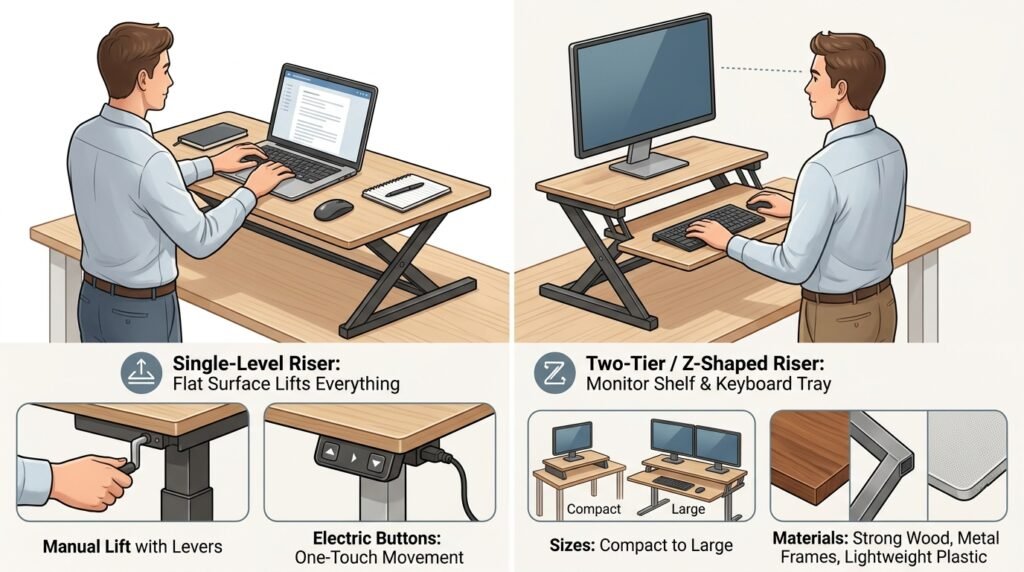
Not all riser desks look the same. Knowing the main types helps you pick what works best for you.
One common type is the single-level riser. It lifts everything on one flat surface. This style feels like your normal desk but higher when needed. Another popular choice is the two-tier or Z-shaped riser. It has a top shelf for the screen and a bottom tray for the keyboard. This setup keeps your eyes looking straight ahead and your hands comfortable.
Some risers use manual lifts with levers. Others have electric buttons that move the platform with just one touch. Manual ones are usually lighter and easier to move. Electric models feel smoother but may need a power outlet. There are also fixed-height options, but adjustable ones give more freedom.
In addition, sizes vary. Compact risers fit small spaces, while larger ones support multiple screens. Materials include strong wood, metal frames, or lightweight plastic. Each type has strengths, so think about your daily routine before choosing.
Main Benefits of Using a Riser Desk
Standing part of the day brings many good changes to your body and mind. First, it improves your posture. When you sit too long, your shoulders often slump forward. A riser desk lets you stand tall, which straightens your back and opens your chest. Over time, this can reduce neck and shoulder pain.
Another benefit is better blood flow. Sitting for hours slows circulation and makes legs feel heavy. Standing gently keeps blood moving, so you feel more awake. Many people notice they have extra energy in the afternoon instead of feeling sleepy.
Riser desks also support heart health and burn a few more calories naturally. This does not replace exercise, but it adds helpful movement during work. In addition, switching positions helps your focus. Your brain stays fresh when your body moves a little. Students, writers, and office workers often say they finish tasks faster with less tiredness.
For people with back problems, this tool offers relief without medicine. Real-life example: A teacher who grades papers at home used a riser. After a few weeks, her lower back felt stronger because she no longer sat all evening. That’s why so many people now try riser desks.
How to Use a Riser Desk the Right Way
Good habits make your riser desk even more helpful. Start by setting it at the correct heights. When sitting, your feet should rest flat on the floor with knees at about right angles. When standing, your elbows should stay level with the keyboard, and the top of your screen should reach your eye level.
Begin with short standing periods. For example, stand for twenty minutes, then sit for forty. After that, slowly increase standing time as your legs get stronger. Use a soft mat on the floor to cushion your feet. This small step prevents tiredness.
Place your mouse close so you do not reach far. Keep your shoulders relaxed. Drink water often because standing can make you thirsty. Another thing is to move your feet gently—shift weight from one leg to the other. This keeps you comfortable longer.
Common mistakes to avoid include standing too long at first, which can tire your feet, or setting the screen too low, which strains your neck. Take breaks to walk around the room. These simple tips help you enjoy the riser desk for years.
Riser Desk Compared to a Full Standing Desk
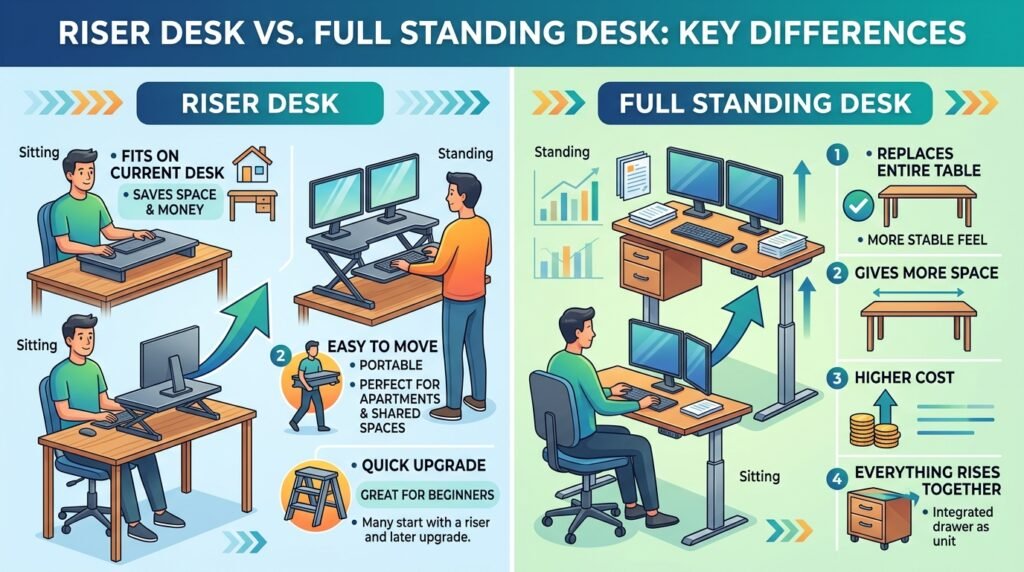
People often wonder how a riser desk differs from a full standing desk. A full standing desk replaces your entire table with legs that move up and down. It gives more space and feels very stable. However, it costs more and takes up more room.
A riser desk sits on your current desk, so it saves money and space. You can move it easily if you change offices or rooms. This makes it perfect for apartments or shared workspaces. On the other hand, full desks suit people who want everything to rise together, including drawers.
Both options help you stand and sit. Choose a riser if you like your present desk and want a quick upgrade. Pick a full desk if you need a bigger change. Many start with a riser and later upgrade. This step-by-step approach works well for beginners.
Practical Uses in Everyday Life
Riser desks fit many lifestyles. Students use them for homework so they stay alert during study sessions. Parents working from home answer emails while standing near their kids. Artists and designers switch positions to keep creative ideas flowing.
In offices, teams share riser desks on regular tables for meetings or focused work. Travelers carry compact folding risers in bags for hotel rooms. Even gamers stand during long sessions to stay comfortable.
One nice use is during video calls. You can stand and look more confident on camera. Another is mixing work with light chores—stand while folding laundry nearby. These real examples show how flexible a riser desk can be in daily life.
Things to Think About When Choosing a Riser Desk
Look for strong materials that support your screen weight without wobbling. Check the height range to match your body size. Wide platforms give more room for papers and cups. Smooth movement is important so the desk does not shake when you type.
Think about your space. Measure your desk first to make sure the riser fits well. Also consider noise—some manual models are quieter than others. Start simple if you are new to standing desks. Later, you can add accessories like footrests or monitor arms for even better comfort.
In 2026, many models include better gas lifts and sturdy builds, making them last longer than older versions. Test the action in a store if possible, or read clear instructions before buying.
FAQ About Riser Desks
How long should I stand at a riser desk each day?
Start with 20 to 30 minutes at a time and build up slowly. Listen to your body and mix sitting and standing.
Can a riser desk work with a laptop?
Yes. Many have space for laptops, and you can add a separate keyboard for better wrist position.
Is a riser desk good for children or short people?
It works well when adjusted properly. Use a footrest if needed to keep good posture.
Does it make noise when moving?
Good quality ones move quietly. Test or check reviews for smooth action.
Will it damage my original desk?
Most have soft pads on the bottom that protect the surface.
Can I use it for drawing or writing by hand?
Yes, especially wider models. Just make sure the height feels right for your arms.
How much weight can a typical riser hold?
Many support 20 to 40 pounds or more. Always check the exact limit for your model.
Conclusion
A riser desk is a smart, simple tool that adds flexibility to any workspace. It helps you stand more, sit less, and feel better during long work hours. With its easy setup, health benefits, and many uses, it suits students, parents, professionals, and anyone who wants more comfort.
Remember to start slow, set good heights, and move naturally throughout the day. Small changes like this can lead to bigger improvements in energy and happiness over months and years. Think about your own routine and see if a riser desk could make your days brighter and healthier.
Your body will thank you for giving it variety and support. Try it and notice how much more enjoyable work becomes when you can move freely.
Disclaimer:
This article provides general information only and is not medical or professional advice. Consult a doctor or ergonomics expert for personalized recommendations. Product options and features change over time; always verify current details from reliable sources. This content is for educational purposes and does not endorse any specific brand or seller.
Explore More:
What Does a Dry Socket Look Like? Symptoms, Pictures, Healing Time & Treatment
How Many Ounces in a Half Gallon? (Quick Answer + Conversion Chart)