 James Archer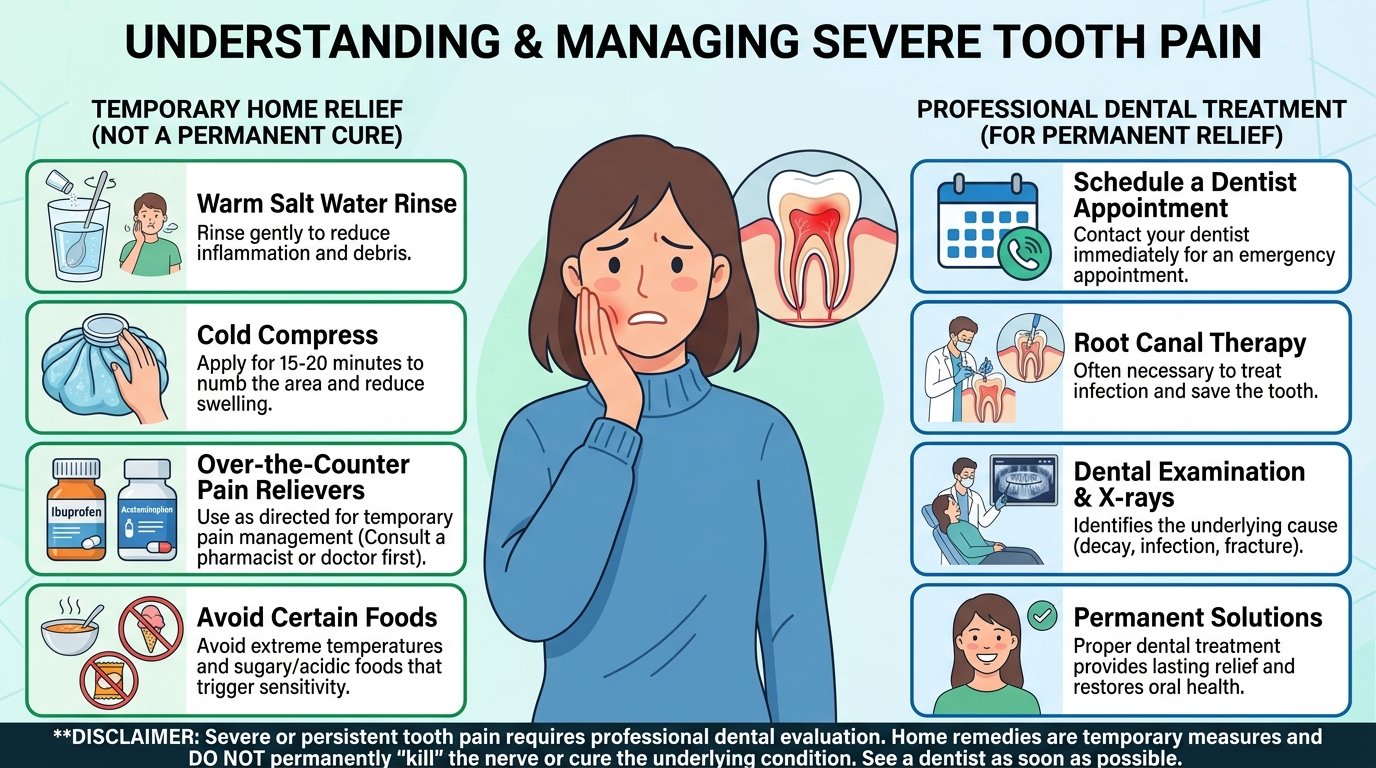
Tooth pain can hit hard and fast. One moment you feel fine, and the next a sharp ache makes it tough to eat, talk, or even think straight. Many people search for ways to kill tooth pain nerve in 3 seconds permanently because they want quick, lasting relief without a trip to the dentist right away.
In 2026, we have better information about what really works for toothaches. The truth is important here. No safe home method can kill the nerve in your tooth in three seconds and make the pain go away forever. That idea is more myth than fact. But you can find real ways to ease the discomfort fast while you plan to see a dental professional. This article shares simple, safe steps that many people use for temporary help.
Why Tooth Nerve Pain Happens
Your tooth has a soft center called pulp that holds nerves and blood vessels. When something goes wrong—like a cavity, crack, or infection—the nerves get irritated. Pressure builds up inside the hard tooth shell, and that causes the strong pain you feel.
This means the pain is your body’s way of saying something needs attention. Ignoring it for too long can let problems grow bigger. That’s why quick relief at home is helpful, but it is only a bridge to proper care.
The Honest Truth About Killing the Nerve in 3 Seconds

Let’s talk straight. You cannot safely kill tooth pain nerve in 3 seconds permanently at home. The nerve sits deep inside the tooth. Home items cannot reach it properly without causing harm.
Trying strong chemicals, extreme heat, or sharp objects often leads to burns, more infection, or worse pain. Dentists use special tools and safe methods, like root canal treatment, to handle the nerve when needed. Home tricks give short-term numbing at best. They do not fix or remove the problem for good.
This is good news in a way. You do not need to risk dangerous experiments. Simple steps can calm things down while you get real help.
Safe Ways to Get Fast Relief at Home
Here are gentle methods that many people try. They focus on reducing swelling, cleaning the area, and soothing the nerve signals. Always test a small amount first to make sure you do not have extra sensitivity.
1. Cold Compress for Quick Numbing
Wrap a few ice cubes in a clean cloth or use a cold pack. Hold it against the outside of your cheek near the sore tooth for 10 to 15 minutes.
The cold slows blood flow and dulls the nerve messages. Many feel relief within minutes. Take a break if it gets too cold, then try again later. This works well for swelling too.
2. Warm Salt Water Rinse
Mix half a teaspoon of salt into a cup of warm water. Swish it gently around your mouth for 30 seconds, then spit it out.
Salt helps clean away bits of food and bacteria. It also calms swelling. You can do this several times a day. It feels soothing right away and is very easy to make with things you already have at home.
3. Clove Oil for Natural Numbing
Clove oil has a compound called eugenol that acts like a mild anesthetic. Dip a cotton ball in a tiny drop of clove oil (mix with a little olive oil if it feels strong). Place it near the painful tooth for a few minutes.
Many people notice the ache gets quieter. Do not use too much because it can irritate gums. This remedy has been used for a long time and still helps today.
4. Over-the-Counter Pain Relief
Medicines like ibuprofen or acetaminophen can lower pain and swelling. Follow the package directions carefully. These give relief that lasts longer than some home tricks.
If you can, take them after eating so they do not upset your stomach. Always check with a doctor or pharmacist if you have other health conditions.
5. Gentle Peppermint Tea Bag
Steep a peppermint tea bag in hot water, let it cool a bit, then place the warm bag against the sore area. The menthol can have a cooling, calming effect.
This feels nice and fresh. You can also sip the tea slowly for extra comfort.
What to Avoid Completely
Some online ideas sound fast but are risky. Never put bleach, alcohol, garlic paste in large amounts, or aspirin directly on your gums. These can burn tissue and make the infection spread.
Also skip trying to poke or pull at the tooth yourself. That can break the tooth more or push bacteria deeper. Stay safe and patient instead.
When to See a Dentist Right Away
Home care helps for a short time. Call your dentist if the pain lasts more than a day or two, or if you notice swelling in your face, fever, or trouble swallowing. These signs mean the problem could be getting serious.
In 2026, many dental offices offer same-day emergency visits. Modern treatments are gentler and faster than before. A quick check can stop small issues from becoming big ones.
Everyday Tips to Prevent Future Tooth Pain
Good habits make a real difference over time. Brush twice a day with a soft toothbrush. Floss gently once a day to clean between teeth. Eat less sugary snacks and drink plenty of water.
If you grind your teeth at night, ask about a simple mouth guard. Small changes like these keep nerves happier and reduce surprise pain.
For example, one busy parent started rinsing with salt water every morning after coffee. She noticed fewer aches after a few weeks. Simple routines add up.
Understanding Different Types of Tooth Pain
Not all tooth pain feels the same. Sharp pain when you eat sweets might point to a cavity. Throbbing pain could mean the nerve is more involved. Pain only on one side when you bite down might come from a crack.
Knowing this helps you describe it better to the dentist. That leads to faster, better care.
How Kids and Families Can Handle Toothaches

Children get tooth pain too. For little ones, stick to very gentle methods like cold compresses and age-appropriate pain medicine. Avoid essential oils unless a doctor says they are okay.
Keep kids calm with stories or their favorite show while the cold pack works. This makes the wait for the dentist easier for everyone.
Building a Simple Home Care Kit
Keep these items handy: salt, ice packs, soft cloths, clove oil, and basic pain relievers. A small kit means you are ready when pain surprises you. Check dates on medicines so they stay fresh.
Common Questions About Tooth Pain Relief
Can I really kill tooth pain nerve in 3 seconds permanently at home?
No. Safe permanent solutions come from dental professionals. Home steps only ease things temporarily.
How long does temporary relief last?
It varies. Cold compresses or clove oil might help for an hour or more. Salt rinses can be repeated often. Combine a few methods for better results.
Is clove oil safe for everyone?
Most adults handle it well in small amounts. Children and pregnant people should check with a doctor first.
What if the pain comes back quickly?
That is a sign to book a dental visit soon. The underlying issue still needs attention.
Are there new 2026 remedies I should know?
Basic care stays similar, but dentists now use better numbing techniques and faster healing methods. Home care still focuses on the same safe classics.
Can diet changes help reduce nerve pain?
Yes. Less acid and sugar protects enamel. More crunchy vegetables and water help clean teeth naturally.
What if I am scared of the dentist?
Many offices now offer calming options like music or gentle techniques. Tell them your worries so they can help you feel comfortable.
Wrapping It All Up
Tooth pain feels awful, but you have safe ways to manage it while you get proper help. Focus on gentle rinses, cold packs, and rest. Remember that true permanent relief for deep nerve issues comes from seeing a dentist.
Take care of your smile a little every day. Small steps now can save you bigger problems later. You deserve to feel comfortable and confident.
Disclaimer:
This article is for informational and educational purposes only. The information is based on general 2026 trends and common dental knowledge. Technology, remedies, and medical advice change quickly, so always verify the latest details with official sources or your dentist. This article does not endorse or promote any specific tool, product, or service. Readers should consult qualified healthcare professionals for personal dental issues. Please respect copyright and terms of service when using any external resources.