 James Archer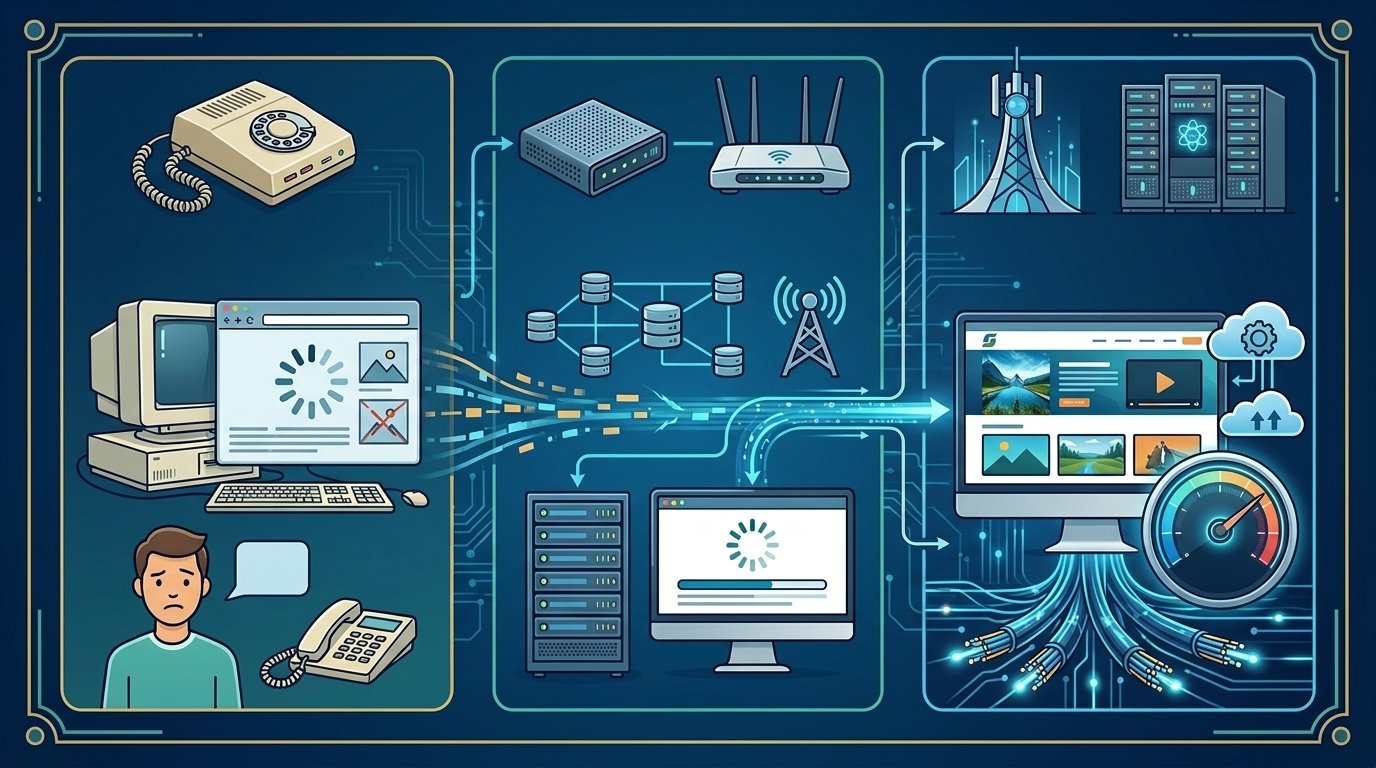
The internet changed our lives in big ways. In the early days, it moved very slowly. People waited minutes for simple pages to load. Today, we watch videos, play games, and chat with friends in seconds. This big change happened because of smart tech ideas that made the web move quicker. These innovations improved internet speed and made our online world smoother and more fun.
This article will explain the main tech ideas step by step. You will learn how they work in simple ways. You will also see why they matter for everyday life. Over time, these changes helped billions of people connect faster than ever before.
From Slow Dial-Up to Always-On Connections
Long ago, people used dial-up internet. They connected through phone lines. The speed was very low, often around 56 kilobits per second. That means a single photo could take many minutes to appear. Also, the phone line stayed busy, so no one could make calls at the same time.
After that, broadband arrived. This was a huge step forward. Broadband gave people an always-on connection. It did not tie up the phone. Speeds jumped to one megabit per second or more. This means families could check email, browse news, and shop online without long waits.
Broadband used technologies like DSL and cable. DSL worked over phone lines but in a smarter way. Cable used television lines. Because of these, the web felt quicker and more useful for daily tasks. People started spending more time online because waiting became less frustrating.
Fiber Optics: Light That Carries Data Fast
Next came fiber optic technology. This idea uses thin glass or plastic threads to send data as light. Light travels extremely fast, so information moves much quicker than over old copper wires.
Fiber optics changed everything for homes and businesses. With fiber, speeds can reach hundreds of megabits or even gigabits per second. That is like having a super highway instead of a small road. For example, you can now download a full movie in seconds instead of hours. Streaming high-quality videos happens without stops or blurry pictures.
In addition, fiber keeps signals strong over long distances. This means fewer problems and clearer connections. Over time, more cities and towns added fiber networks. That’s why many families today enjoy reliable fast internet for schoolwork, work from home, and family entertainment.
Mobile Networks: From 3G to 5G and Beyond
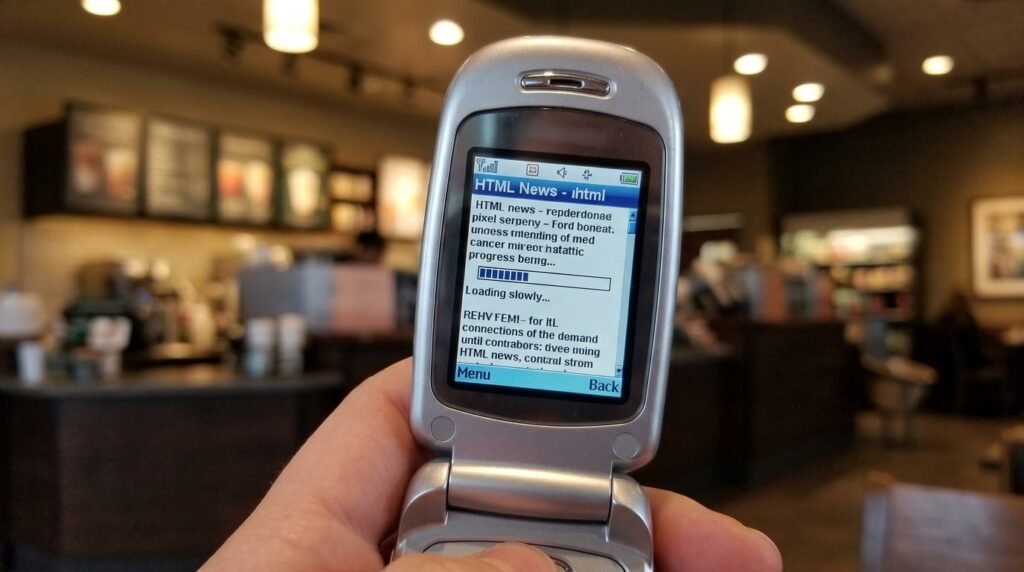
The web did not stay only on computers. Phones became important too. Early mobile internet was slow. Then 3G arrived and brought better speeds for basic browsing and emails on the go.
After that, 4G made things even smoother. People could watch videos and use maps without much delay. Now, 5G takes it further in 2026. It offers very high speeds and low delay between actions. This means almost instant responses.
For example, video calls look clear, and online games feel real-time. 5G also supports many devices at once without slowing down. That helps smart homes with lights, cameras, and other gadgets. These mobile improvements made the web move quicker no matter where you are.
HTTP Changes: Better Rules for Sending Web Pages
Websites need rules to send information to your browser. Old rules worked but had limits. Then HTTP/2 came along. It allowed many files to travel together at the same time instead of one after another. This reduced waiting and made pages load faster.
Next, HTTP/3 brought even bigger gains. It uses a smart system called QUIC. This new way handles problems better when the connection is not perfect. For instance, if one part of the data slows down, other parts keep moving. Connection setup also happens quicker.
As a result, pages feel snappier on phones and laptops, especially when traveling or using busy networks. These protocol updates quietly improved speed for everyone who uses the web.
Content Delivery Networks: Bringing Content Closer to You
Another great idea is content delivery networks, often called CDNs. Big websites have files on one main computer far away. When many people visit at once, that computer gets busy and slow.
CDNs fix this by making copies of pictures, videos, and pages. They place these copies on servers in many cities around the world. When you visit a site, the system picks the closest server. Data travels a shorter distance, so it arrives faster.
For example, a news video from another country loads quickly because a nearby server already has it ready. In addition, CDNs help during busy times like big sports events. They spread the work and keep everything moving smoothly. This tech idea made the global web feel local and quick.
Smart Tricks: Compression, Caching, and More
Many smaller ideas also helped the web move quicker. Compression squeezes files to make them smaller before sending. Your browser then opens them back up. This saves time and data, especially on mobile plans.
Caching is another helpful trick. Browsers and servers remember parts of websites you visited before. The next time, they show the saved version instead of fetching everything again. That’s why returning to a favorite site feels instant.
Lazy loading is useful too. It waits to load pictures or videos until you scroll near them. This keeps initial page loads light and fast. Over time, developers learned to combine these tricks. Websites now load in under a few seconds, even with rich photos and videos.
Wi-Fi Improvements and Wireless Speed
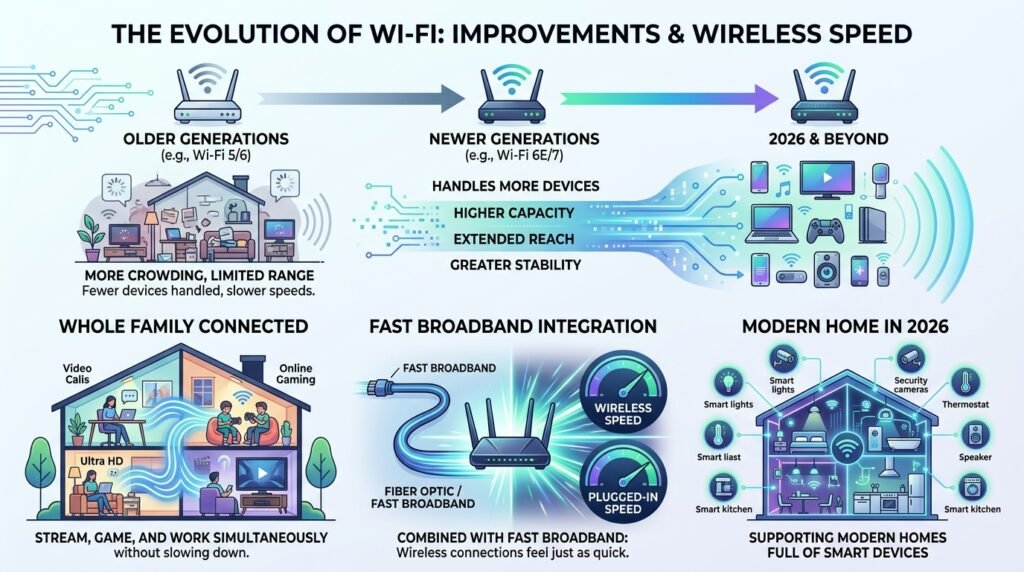
Wires are not the only way to connect. Wi-Fi got much better across generations. Newer versions handle more devices at home without crowding. They also reach farther and stay more stable.
This means your whole family can stream, game, and work at the same time. Combined with fast broadband or fiber, wireless connections feel just as quick as plugged-in ones. In 2026, these advances support modern homes full of smart devices.
Common Mistakes People Make with Internet Speed
Many people think buying the fastest plan always solves slow web problems. Sometimes the real issue is an old router, too many devices, or background updates. Checking your Wi-Fi setup and closing unused apps can help a lot.
Another mistake is ignoring updates. New software often includes speed improvements. Also, using wired connections for important tasks like video calls can give extra stability compared to Wi-Fi. Simple habits like these make the tech innovations work even better.
FAQ
What made dial-up internet so slow compared to today?
Dial-up used regular phone lines and low speeds. Modern fiber and 5G use better materials and smarter rules to move data much faster.
How do CDNs help the web move quicker?
They store copies of content near users so data does not travel long distances.
Is 5G faster than home fiber?
Both are very fast. Fiber often gives steady high speeds at home, while 5G brings great mobile performance anywhere.
Why do some websites still load slowly?
Heavy images, many ads, or far-away servers can cause delays. Good design and CDNs fix most issues.
Can I improve speed without changing my plan?
Yes. Update your devices, use compression where possible, clear cache sometimes, and choose strong Wi-Fi channels.
What will make the web even quicker in the future?
Continued work on 5G-Advanced, better protocols, and smarter networks will keep improving experiences.
Do all these innovations cost more for users?
Over time, they became more affordable as technology spread and competition grew.
Conclusion
Tech ideas that made the web move quicker came one after another. From replacing dial-up with broadband and fiber to creating better protocols like HTTP/3 and using CDNs, each step built on the last. Mobile networks, wireless improvements, and small smart tricks all played important roles too.
Together, these innovations changed the internet from a slow tool into a fast, everyday helper. We now enjoy smooth videos, quick information, and easy connections with people far away. In the end, the story shows how human creativity keeps making our digital world better. Keep learning about new changes, and you will always get the most from faster internet. The future looks bright as speed keeps improving for everyone.
Disclaimer: This article is for informational and educational purposes only. It provides general knowledge based on publicly known technological developments and does not constitute technical advice. Internet speeds vary by location, provider, and many other factors.
Explore More:
Security Service Federal Credit Union: Login, Rates, Routing Number, Locations & Services (2026)
Sora Sushi & Seafood Buffet: Menu, Prices, Location, Hours & Customer Reviews